
Delivering BIM and Surveying Solutions for Thames Water
SOCOTEC delivered a comprehensive surveying and BIM solution to support future upgrade works at a live water treatment facility, providing a fully coordinated digital twin without disrupting critical operations.
Challenge
Thames Water, one of the UK's largest water and wastewater service companies, required comprehensive surveying and digital modelling services for one of its Water Treatment works.
The facility provides clean water for London and required detailed topographical surveys, underground utility mapping, and sophisticated Building Information Modelling (BIM) to be carried out, to support planned upgrade works.
There were soon several challenges presented by the project which required precise documentation without disrupting operations.
SOCOTEC became involved, and soon realised a detailed 3D model was needed in order to support future design and construction phases. It became clear that the project timeline demanded coordination across multiple surveying disciplines.
Project Description and Background
SOCOTEC has held a strong working relationship with Thames Water, having previously delivered successful large-scale projects with other Thames water sites.
This established partnership, built on reliable delivery and technical expertise, led Thames Water to approach SOCOTEC for the Water Treatment Works project.
SOCOTEC received Thames Water’s initial inquiry in May 2024, with topographical surveys, PAS128 underground utility surveys, comprehensive laser scanning, and full modelling of the facility specifically requested.

Delivering BIM and Surveying Solutions for Thames Water
Solution
SOCOTEC deployed a multi-disciplinary solution, combining advanced surveying technologies with cross-collaboration efforts with international colleagues.
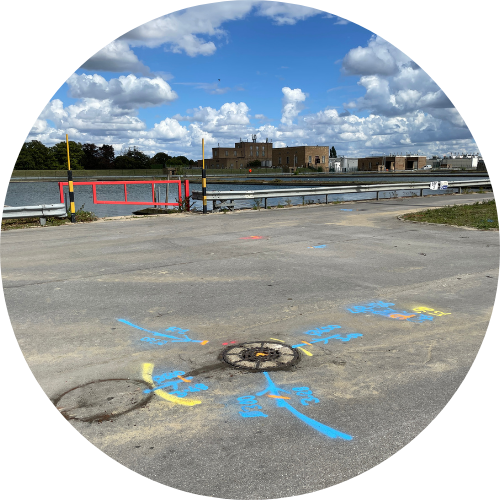
The work was broken down into a five-week on-site surveying phase, which comprised of topographical surveys, which were carried out to capture the site's physical features, PAS128-compliant underground utility surveys to map subsurface infrastructure, comprehensive laser scanning to create detailed 3D mapping data, and aerial drone photography for to provide overview imagery and site context.
Next, was the digital modelling phase. Lasting eight weeks, SOCOTEC UK & Ireland reached out to colleagues who had the capacity to leverage specialised BIM expertise, and provide the extensive digital modelling the project required.
With multiple teams working concurrently on model development, as well as cost-effective resource deployment, SOCOTEC was able to deliver a significantly accelerated delivery timeline of eight weeks as opposed to an estimated six-month period.
The project demonstrated SOCOTEC's ability to integrate its global technical resources, which included a dedicated architect with advanced modelling capabilities, working as part of the extended UK team.
SOCOTEC deployed a multi-disciplinary solution, combining advanced surveying technologies with cross-collaboration efforts with international colleagues.
The work was broken down into a five-week on-site surveying phase, which comprised of topographical surveys, which were carried out to capture the site's physical features, PAS128-compliant underground utility surveys to map subsurface infrastructure, comprehensive laser scanning to create detailed 3D mapping data, and aerial drone photography for to provide overview imagery and site context.
Next, was the digital modelling phase. Lasting eight weeks, SOCOTEC UK & Ireland reached out to colleagues who had the capacity to leverage specialised BIM expertise, and provide the extensive digital modelling the project required.
With multiple teams working concurrently on model development, as well as cost-effective resource deployment, SOCOTEC was able to deliver a significantly accelerated delivery timeline of eight weeks as opposed to an estimated six-month period.
The project demonstrated SOCOTEC's ability to integrate its global technical resources, which included a dedicated architect with advanced modelling capabilities, working as part of the extended UK team.
Delivering BIM and Surveying Solutions for Thames Water
Conclusion
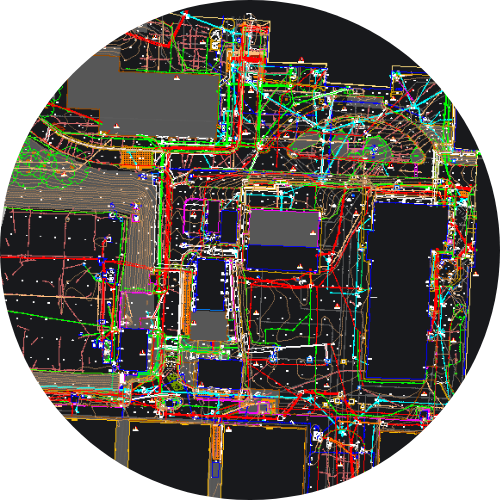
The project was successfully delivered with final drawings and models completed by the end of October 2024. Thames Water benefitted from the detailed 3D model providing a complete digital twin of the facility, while international collaboration across SOCOTEC delivered a 40% in cost savings while maintaining quality standards.
As a result of the multi-team approach to the project, SOCOTEC managed to cut the modelling time involved from six months to eight weeks, drastically improving the outcome for Thames Water. The model that was used for this project can be updated with the requisite information following future upgrade works.
Critically, SOCOTEC was able to carry out all surveying activities without disrupting critical water treatment operations and Thames Water remain a satisfied, long-standing client.
The project was successfully delivered with final drawings and models completed by the end of October 2024. Thames Water benefitted from the detailed 3D model providing a complete digital twin of the facility, while international collaboration across SOCOTEC delivered a 40% in cost savings while maintaining quality standards.
As a result of the multi-team approach to the project, SOCOTEC managed to cut the modelling time involved from six months to eight weeks, drastically improving the outcome for Thames Water. The model that was used for this project can be updated with the requisite information following future upgrade works.
Critically, SOCOTEC was able to carry out all surveying activities without disrupting critical water treatment operations and Thames Water remain a satisfied, long-standing client.
Want to find out more?
Discover our latest News & Media
Geophysics to Support Ground Investigation: Reduce Risk and Improve Ground Understanding

The Competency Framework for Fire Risk Assessors: The Practicalities

An Introduction to LSTC Group and Their Role in Nationally Significant Infrastructure Projects (NSIPs)
A Practical Guide to BS EN 13501-1 Classifications with UKTC
Bioremediation Field Applications: Delivering Effective In-Situ Remediation Solutions
SOCOTEC organises key antidisciplinary workshop to address concerns within AEC industry
Hydrographic Surveying: More Than Just Mapping the Seabed