
Structural Fire Engineering Services: Case Study on Existing Residential Buildings
Challenge
A long-standing SOCOTEC UK & Ireland client and major residential developer identified breaches in protective layers during site assessments of existing residential buildings. The key question that needed answering for the client was whether extensive and costly remediation works would be required to retrospectively protect the structure, or whether a targeted approach could be adopted, all while maintaining safety and compliance.
Project Description and Background
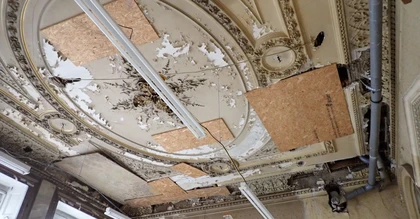
The client required an assessment of several existing steel-framed residential structures with precast concrete unit floors, in which compromised fire protection had been identified. Buildings are typically designed to achieve a specified structural fire resistance; however, throughout the life of a building, structural protection may be compromised by ageing, poor maintenance, or building works.
The project involved two residential buildings, one five-storey and one six-storey structure, with both requiring evaluation to determine whether their inherent structural fire resistance could meet safety requirements despite the identified gaps in protection. Without a detailed understanding of structural behaviour under fire conditions, the client faced the prospect of blanket remediation across all affected buildings, with high cost, disruption, and environmental implications.
Solution
SOCOTEC's Structural Fire Engineering (SFE) team conducted performance-based structural fire analysis using advanced finite element modelling through a software called OpenSees. Thermo-mechanical models were developed to assess the steel-framed structures under fire conditions using the standard time-temperature curve.
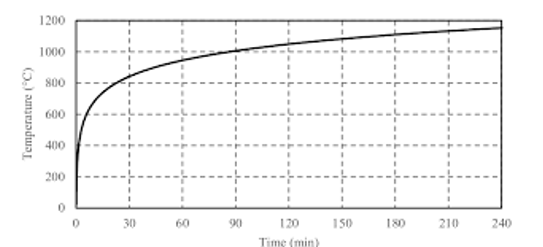
Figure 1: Standard Time-Temperature Fire Curve in accordance with ISO 834
The models considered exposed steel beams and fire-protected columns, with a conservative fire scenario assuming fire spread between flats (in compliant conditions, fire spread between flats should not be considered due to compartmentation) to determine the behaviour of structural elements against acceptance criteria.
The analysis focused on the most critical locations, including the longest spanning beams, to evaluate the buildings' inherent structural fire resistance.
Within the five-storey residential building, analysis revealed that the central beam exceeded acceptance criteria during assessment. Due to significant bowing of the steel-composite floor, this beam experienced high deflections and displacement rates during early fire stages, indicating potential failure. The displacement contours of the model highlighted the central beam exceeding the criteria.
The recommendation of SOCOTEC’s SFE team was for passive fire protection to be utilised for this isolated beam, in order to prevent failure during a real fire event. The remaining modelled beams demonstrated adequate fire resistance and required no retrospective protection. Similarly, all columns met the required criteria for performance, meaning no additional fire protection measures were necessary.
When it came to the six-storey residential building, all heated beams remained in compression throughout the analysis, with none exceeding acceptance criteria. The column load redistribution did not result in overloading in heated columns, and no columns experienced reversal in vertical displacement.
As a result, it was recommended that there was no retrospective fire protection required for the beams. However, one column was identified as experiencing the most significant loading and was flagged as the most vulnerable element, with particular emphasis recommended on inspecting the fire protection during future surveys.
Conclusion
SOCOTEC’s detailed analysis of the fire performance of existing structures was to determine whether the required level of resistance was achieved. The findings demonstrated that structural stability was maintained, despite insufficient protection in specific locations, with only a few isolated structural elements requiring retrospective passive protection. These measures were recommended in conjunction with comprehensive fire strategy enhancements, including means of escape provisions and active fire protection systems.
This proportionate, performance-based approach prevented unnecessary extensive remediation works by avoiding blanket remediation, whilst upholding safety standards and compliance, delivering significant benefits across multiple areas. SOCOTEC’s findings ensured there was minimal disruption to residents in the occupied building by targeting critical structural elements.
By preventing unnecessary application of passive fire protection materials, the analysis significantly reduced the carbon footprint associated with manufacturing, transportation, and installation. In turn, this led to a substantial reduction in cost to the client, optimising expenditure whilst maintaining compliance and safety.
Want to find out more about...
Discover our latest News & Media

A Practical Guide to BS EN 13501-1 Classifications with UKTC

Fire Strategies in Complex Buildings

SOCOTEC Partners with University of Liverpool Student to Advance Fire Safety Science

SOCOTEC UK & Ireland host leading Fire Engineering seminar

Guidance on Temporary Protective Covering Materials on Scaffolding