Need some advice?
Leave your details and we will get in touch.
I want to be contacted by an expert
1 /

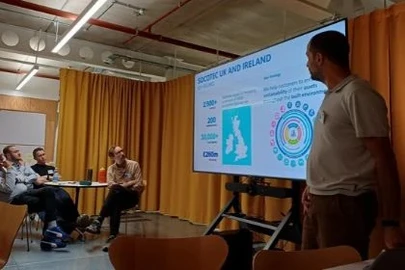
David Lanckmans, Training Manager for Health and Safety Consultancy at SOCOTEC UK and Ireland, has developed the methods used for training individuals in health and safety across various backgrounds.

We talked with David to understand his experiences in health and safety training; alongside the way he approaches training.
“Originally, I trained as a landscape designer. I was heavily involved with the development of London Dockyards in the 1980s. One day, an accident happened on-site, and there was nobody who could deal with it, and the managing director asked me to look at it. At the time, I hadn’t got a clue, so it triggered everything because he asked if I would get involved with the health and safety."
I became a Health and Safety Advisor for five years, then went on to become a Health and Safety Manager in construction, and then a Health and Safety Director. I’ve been involved in construction, mainly demolition, hazardous materials, that side of asbestos removal, and Construction (Design and Management) Regulations since they came into force in 1995.
“I decided to become more involved in the training aspect because I felt there was a skills shortage in people with the experience to be able to do it. I re-trained to get my teaching qualifications, and from there it’s been a progression to where I am now. I decided to join SOCOTEC in 2024 given the reputation they had within the industry and the level of professionalism within the training department”
“In my role as Training Manager, I still get involved in presenting the courses, although I tend to specialise more in construction related course including CDM, IOSH (Institution of Occupational Safety and Health), IOSH Managing Safely, and IOSH Working Safely.
“We get a lot of repeat business, there’s no doubt about that, we also get new clients who tend to be interested in the more bespoke and/or accredited courses.
“There are mainly three different types of training. There is the classroom-based training which is a great way for people to get the most out of a training course. Face to face is the best way. The next best way is remote training, which we can do on Teams for most but not all courses. And then there’s e-learning, but you don’t get out of it quite what you would if it was face-to-face or remotely. It all depends on what the client wants, we can talk it through with them and generally come up with a solution to meet their needs.”
“There’s no such thing as a good time. As soon as anyone is involved in going to work, training needs to start. If someone starts their training program early in their career – the earlier we can help them, the better it is for helping them move forward. The earlier candidates have the skills training the better it is for a safer and healthier working environment.”

“Construction is a very particular place. One minute you can be speaking to project managers and senior team members, the next minute you may be chatting about health and safety with a team of scaffolders. How you explain and interact with them will dictate the response and co-operation that you need, it’s no different in the classroom. Those who are architects, designers, project managers and supervisors are more used to a classroom-type environment, whereas probably a scaffolder or plumber isn’t. They’re more used to going out and having hands-on experiences – you really must tailor the training to suit the needs of your attendees.
“We generally think about how we’re going to get it across, put it into the required terminology they understand, make sure they never get bored, and keep them engaged the whole time. It might be through anecdotes, or videos that we’re showing to illustrate their experiences, anything they can relate to which makes them remember it”
“Construction is a very particular place. One minute you can be speaking to project managers and senior team members, the next minute you may be chatting about health and safety with a team of scaffolders. How you explain and interact with them will dictate the response and co-operation that you need, it’s no different in the classroom. Those who are architects, designers, project managers and supervisors are more used to a classroom-type environment, whereas probably a scaffolder or plumber isn’t. They’re more used to going out and having hands-on experiences – you really must tailor the training to suit the needs of your attendees.
“We generally think about how we’re going to get it across, put it into the required terminology they understand, make sure they never get bored, and keep them engaged the whole time. It might be through anecdotes, or videos that we’re showing to illustrate their experiences, anything they can relate to which makes them remember it”
“I think the biggest challenge we have is the change in workers.
“Now we find people coming back to the classroom, on their second time around. They’ve been here for a year or two, and they’re coming back in. I’ve noticed the change with people I’ve seen before who perhaps struggled a bit. Now they’ve got knowledge and understanding from experience.
“In all courses, there’s an element of flexibility we have built in. So, what I do if I spot someone struggling is I tend to have a chat, find out how I can help, and ask what we can do to make it work.”
“At the moment, we’re actively recruiting some associates to work closely with us.
“For us at SOCOTEC, we’ve got to be professional, but having experience is so important. You can have all the qualifications in the world but no idea how to put it into place in the field. It’s getting that balance of skills, knowledge, and experience.
“With any training, I’d much rather it be a smoulder. We can then build upon it; you can’t just become a trainer overnight. You need that natural ability to be able to talk to people and make impactful change. One minute you could be talking to site workers in the classroom, the next you could have directors or engineers sitting there and you need to tailor what you’re saying to these different audiences.”
Want to find out more...