Need some advice?
Leave your details and we will get in touch.
I want to be contacted by an expert
1 /

Utility coring is the most effective way of proving that re-surfacing works have been carried out correctly after utility works have taken place.

Underground services and assets below the surfaces of roads, footways and verges across the UK may require access at any time by the utility service providers, or new services may need to be laid; such as full fibre, so all properties are fully connected to the network with fast, reliable internet access or smart meters which help monitor water usage to each property and detect leaks.
Utility coring takes place once all underground works are complete to ensure the reinstatement has been completed to the standard required. It is the responsibility of the service provider (or their supply chain) to fully reinstate the excavation in line with either the requirements of the Specification for the Reinstatement of Openings in Highways (SROH in England & Wales) or the Specification for the Reinstatement of Openings in Roads (SROR in Scotland).
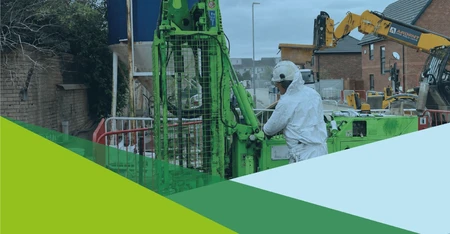
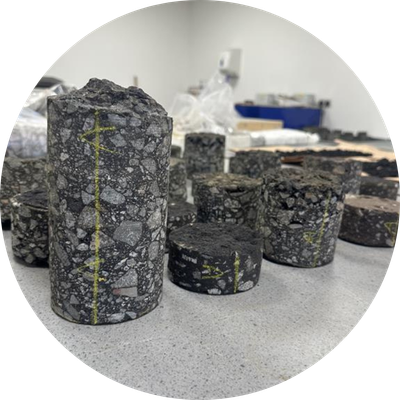
A utility core is a small core sample (typically 100mm diameter) that is extruded from the bound surfacing material used to reinstate the excavation. Once extruded, the core is assessed against the relevant specification to ensure it meets the requirements set out for the overall depth of the surfacing materials – including depths of individual surface, binder & base course layers – and ensures the correct materials for the road category have been used.
A Bulk and Maximum Density test is carried out on each structural layer of the sample to ensure the reinstatement of the bituminous materials reach the necessary level of compaction – the Air Void percentage result of this test is compared to the permitted ranges within specifications.
Ensuring the depth, density, and materials used are in line with standards is fundamental as it protects pedestrian and road-user safety.
The SROH/SROR are specifications issued by the Department of Transport, outlining the acceptable criteria for the reinstatement from the level of the underground service right up to surface level.
A utility core is a small core sample (typically 100mm diameter) that is extruded from the bound surfacing material used to reinstate the excavation. Once extruded, the core is assessed against the relevant specification to ensure it meets the requirements set out for the overall depth of the surfacing materials – including depths of individual surface, binder & base course layers – and ensures the correct materials for the road category have been used.
A Bulk and Maximum Density test is carried out on each structural layer of the sample to ensure the reinstatement of the bituminous materials reach the necessary level of compaction – the Air Void percentage result of this test is compared to the permitted ranges within specifications.
Ensuring the depth, density, and materials used are in line with standards is fundamental as it protects pedestrian and road-user safety.
The SROH/SROR are specifications issued by the Department of Transport, outlining the acceptable criteria for the reinstatement from the level of the underground service right up to surface level.
Local Authorities may carry out their own coring programme to ensure all utility service providers (and their supply chain) are carrying out excavation works to the correct standard whilst working in their area.
Likewise, the utility service providers may also regularly assess the quality of the works completed by sub-contractors to ensure the work is up to standard – if it isn’t, a coring programme could highlight poor workmanship.
A surfacing contractor may carry out a coring programme to prove the consistent quality of their own works; this information can be used to assist with getting works signed off and for confirmation of the standard of their work for contractors.
Utility coring ensures a greater quality of work – an enhanced quality of performance from the ground teams who know they could be assessed, and a greater level of trust of the quality from the local authority or sub-contractor.
Local Authorities may carry out their own coring programme to ensure all utility service providers (and their supply chain) are carrying out excavation works to the correct standard whilst working in their area.
Likewise, the utility service providers may also regularly assess the quality of the works completed by sub-contractors to ensure the work is up to standard – if it isn’t, a coring programme could highlight poor workmanship.
A surfacing contractor may carry out a coring programme to prove the consistent quality of their own works; this information can be used to assist with getting works signed off and for confirmation of the standard of their work for contractors.
Utility coring ensures a greater quality of work – an enhanced quality of performance from the ground teams who know they could be assessed, and a greater level of trust of the quality from the local authority or sub-contractor.
Additionally, utility coring can reduce the overall working cost, as it ensures work is being carried out to the highest quality, reducing the need for costly re-visits to correct sub-standard work, and eradicating fines issued by the local authority for defects.
The reputation of the utility service providers is also maintained through less disruption to the local area and general public as work is completed correctly in the first instance and avoids having to replace the ground surface of roads and paths multiple times.
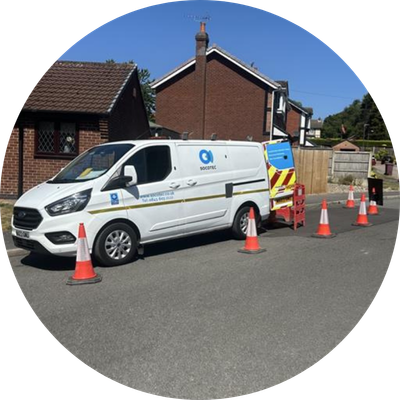
SOCOTEC can assist with the management of a full utility coring programme from traffic management to laboratory testing of the coring sample. For more information regarding SOCOTEC’s utility coring services, please contact us.
What to find out more about Utility Coring?