Need some advice?
Leave your details and we will get in touch.
I want to be contacted by an expert
1 /

The most prominent sustainability and wellbeing assessment frameworks in the built environment are BREEAM, WELL and LEED. It’s important to understand the significance of these certifications, how they can improve a building’s sustainability and the wellbeing of those using the building, as well as how each certification differs and the processes involved in attaining certification.

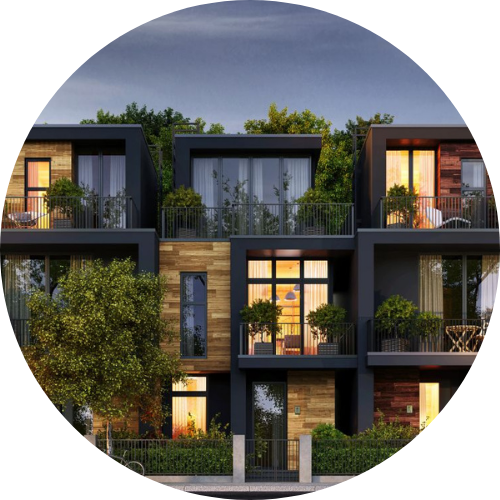
BREAAM is the global leading green building rating system used to measure environmental performance of new and existing buildings and infrastructure. Having a BREEAM certified building is better for the environment as the requirements aim to tackle climate change, reduce energy, lessen water consumption, enable greener transportation and produce less waste.
BREEAM covers a wide variety of building types, with the certification itself being highly adaptable. It can be applied to commercial buildings (offices, shops, etc.), residential properties, schools, hospitals, among other buildings. Nearly any building is suitable for the certification, and BREEAM Bespoke is available as a customised approach for buildings that fall outside of the standard assessment framework. The Bespoke option tailors the assessment criteria to the building’s function and location where necessary.
BREEAM is broken down into ten categories, with buildings needing to attain a score in each section to reach certification. The categories are:
There are two assessment stages: the design stage and the construction stage. The design stage requires evidence of design drawings, specifications and contract clauses to demonstrate the strategy to reach certification. A report is produced by the assessor and credits and certificates are then issued. The construction stage is similar but with the built evidence – the assessor verifies the building has been constructed in alignment with the approved specifications and design, ensuring it meets the performance targets.
BREAAM is the global leading green building rating system used to measure environmental performance of new and existing buildings and infrastructure. Having a BREEAM certified building is better for the environment as the requirements aim to tackle climate change, reduce energy, lessen water consumption, enable greener transportation and produce less waste.
BREEAM covers a wide variety of building types, with the certification itself being highly adaptable. It can be applied to commercial buildings (offices, shops, etc.), residential properties, schools, hospitals, among other buildings. Nearly any building is suitable for the certification, and BREEAM Bespoke is available as a customised approach for buildings that fall outside of the standard assessment framework. The Bespoke option tailors the assessment criteria to the building’s function and location where necessary.
BREEAM is broken down into ten categories, with buildings needing to attain a score in each section to reach certification. The categories are:
There are two assessment stages: the design stage and the construction stage. The design stage requires evidence of design drawings, specifications and contract clauses to demonstrate the strategy to reach certification. A report is produced by the assessor and credits and certificates are then issued. The construction stage is similar but with the built evidence – the assessor verifies the building has been constructed in alignment with the approved specifications and design, ensuring it meets the performance targets.
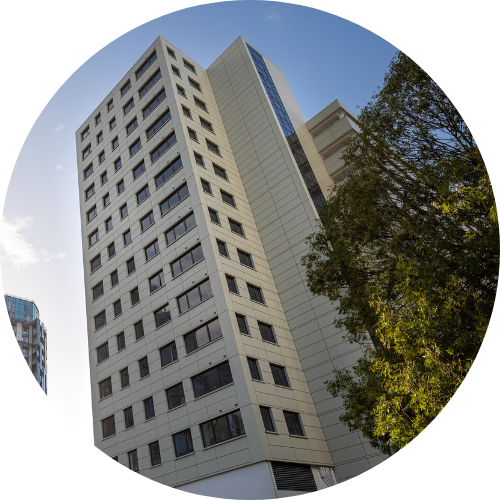
The WELL Building Standard is an internationally recognised certification programme launched in 2014 that is now in place in over 120 countries. WELL consists of a set of strategies backed by scientific research that aim to enhance human health and wellbeing through design interventions for thoughtful and intentional spaces.
WELL has a holistic rating system, with points available from a range of features. The concepts include preconditions and optimisations, all preconditions within the concepts are mandatory for WELL certification, but the optimisations are not – you can pick which elements are applicable to your building, with minimum points per concept for different levels of certification.
The concepts for WELL certification are:
The process for achieving WELL certification is similar to BREEAM, with an early design pre-assessment stage followed by two rounds of documentation reviews (preliminary and final). The project must be verified through on-site testing as it is a performance-based system.
This includes on-site measurements taken for air and water quality parameters, as well as sound and light levels. WELL certification also requires projects to monitor real-time building performance through the collection of ongoing performance data, and recertification is required every three years following initial certification.
The WELL Building Standard is an internationally recognised certification programme launched in 2014 that is now in place in over 120 countries. WELL consists of a set of strategies backed by scientific research that aim to enhance human health and wellbeing through design interventions for thoughtful and intentional spaces.
WELL has a holistic rating system, with points available from a range of features. The concepts include preconditions and optimisations, all preconditions within the concepts are mandatory for WELL certification, but the optimisations are not – you can pick which elements are applicable to your building, with minimum points per concept for different levels of certification.
The concepts for WELL certification are:
The process for achieving WELL certification is similar to BREEAM, with an early design pre-assessment stage followed by two rounds of documentation reviews (preliminary and final). The project must be verified through on-site testing as it is a performance-based system.
This includes on-site measurements taken for air and water quality parameters, as well as sound and light levels. WELL certification also requires projects to monitor real-time building performance through the collection of ongoing performance data, and recertification is required every three years following initial certification.
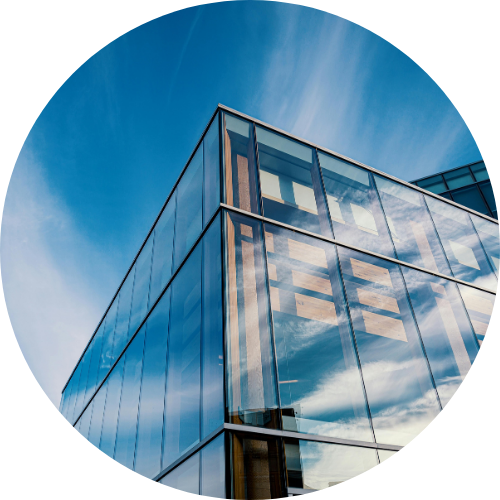
LEED is the world’s most widely used green building rating system, with it available for nearly all building types. The LEED Building Standard provides a framework for healthy, highly efficient, and cost-saving green buildings, offering environmental and social benefits.
LEED is an American-originated certification scheme and is the default in the USA and Canada but is also a globally recognised symbol of sustainability. It’s used across the world, notably in China, the Middle East, India, South America, and Asia-Pacific regions. In the UK and Europe, LEED has a more limited presence as BREEAM is the preferred environmental rating system due to its UK origin and establishment in European markets.
The LEED rating system is split into five different categories for building/infrastructure type: Green Building Design & Construction (new construction, core & shell, schools, healthcare, retail), Green Interior Design & Construction (commercial interiors, retail interiors), Green Building Operations & Maintenance (existing buildings, existing schools), Green Homes Desing & Construction, and Green Neighbourhood Development.
To receive LEED certification, projects must pursue credits that earn points from environmental sections:
BREEAM and LEED are environmental certification schemes, whereas WELL prioritises the building’s impact on human health and wellbeing.
For UK buildings and infrastructures, BREEAM is the leading environmental certification framework.
BREEAM and WELL are designed to work in conjunction, the systems offering strategic advantages for organisations pursuing dual certification. Some BREEAM credits are equivalent to WELL concepts, so achieving the BREEAM credit can directly support WELL compliance. Other credits are aligned so they only partially support WELL requirements and may need additional documents or measures to fully meet WELL standards.
However, as LEED is used across the world, some international organisations like to have LEED certification for global consistency in their building standards. LEED is increasingly recognised in the UK for projects seeking an internationally respected sustainability framework.
LEED is the world’s most widely used green building rating system, with it available for nearly all building types. The LEED Building Standard provides a framework for healthy, highly efficient, and cost-saving green buildings, offering environmental and social benefits.
LEED is an American-originated certification scheme and is the default in the USA and Canada but is also a globally recognised symbol of sustainability. It’s used across the world, notably in China, the Middle East, India, South America, and Asia-Pacific regions. In the UK and Europe, LEED has a more limited presence as BREEAM is the preferred environmental rating system due to its UK origin and establishment in European markets.
The LEED rating system is split into five different categories for building/infrastructure type: Green Building Design & Construction (new construction, core & shell, schools, healthcare, retail), Green Interior Design & Construction (commercial interiors, retail interiors), Green Building Operations & Maintenance (existing buildings, existing schools), Green Homes Desing & Construction, and Green Neighbourhood Development.
To receive LEED certification, projects must pursue credits that earn points from environmental sections:
BREEAM and LEED are environmental certification schemes, whereas WELL prioritises the building’s impact on human health and wellbeing.
For UK buildings and infrastructures, BREEAM is the leading environmental certification framework.
BREEAM and WELL are designed to work in conjunction, the systems offering strategic advantages for organisations pursuing dual certification. Some BREEAM credits are equivalent to WELL concepts, so achieving the BREEAM credit can directly support WELL compliance. Other credits are aligned so they only partially support WELL requirements and may need additional documents or measures to fully meet WELL standards.
However, as LEED is used across the world, some international organisations like to have LEED certification for global consistency in their building standards. LEED is increasingly recognised in the UK for projects seeking an internationally respected sustainability framework.
SOCOTEC can provide guidance and support regarding these certification schemes. Please contact us for further information regarding our services.