Need some advice?
Leave your details and we will get in touch.
I want to be contacted by an expert
1 /

In 2002, the Control of Asbestos at Work Regulations (CAWR) formally introduced the duty to manage asbestos in non-domestic premises.

CAWR Regulation 4 demanded that the dutyholder be accountable for managing any asbestos containing materials (ACMs) that were left in-situ.
This regulation instructed the dutyholder to:
· Undertake a suitable and sufficient assessment to ascertain whether asbestos, ‘is or is liable to be present’, in a building
· Where asbestos was identified or presumed, the dutyholder must deploy a plan to prevent exposure
The requirements of the duty to manage asbestos remained largely unchanged in 2006 and within the Control of Asbestos Regulations 2012 (CAR). The default action for ACMs should be that they are left in-situ and effectively managed to prevent exposure, providing they are not already damaged, at risk of damage or are likely to be disturbed by works.
However, considering the age of some of the ACMs we have left in-situ, can we be confident that we are still able to effectively plan to prevent exposure from some of the materials that are being left in-situ?
In 2024, the Victorian Asbestos Eradication Agency in Australia released their proposal for the plan to eradicate asbestos from government owned buildings. Part of the plan included a chart on the expected lifespans of asbestos materials and their introduction date into the country. What is most alarming about this chart is how many of the materials have passed their expected lifespan. In the UK, these materials have also been used in our buildings and will have very similar lifespans.
If we take the case of asbestos cement corrugated roof sheeting, the maximum expected lifespan is detailed as being 40 years. This material is ubiquitous in the UK and was used until the ban on Chrysotile asbestos in 1999. That would put our youngest asbestos cement roofs as 27 years old, nearing the average expected lifespan of the material. A lot of our cement roofs are significantly older than this though, with some approaching 70+ years old.
Typically, asbestos cement is classed as a ‘low-risk’ material and is often recommended for manage in asbestos surveys and reinspections. Although this is often appropriate, especially when considering internal materials, it may be time for us to re-evaluate our approach to effective asbestos management, starting with the risk assessment.
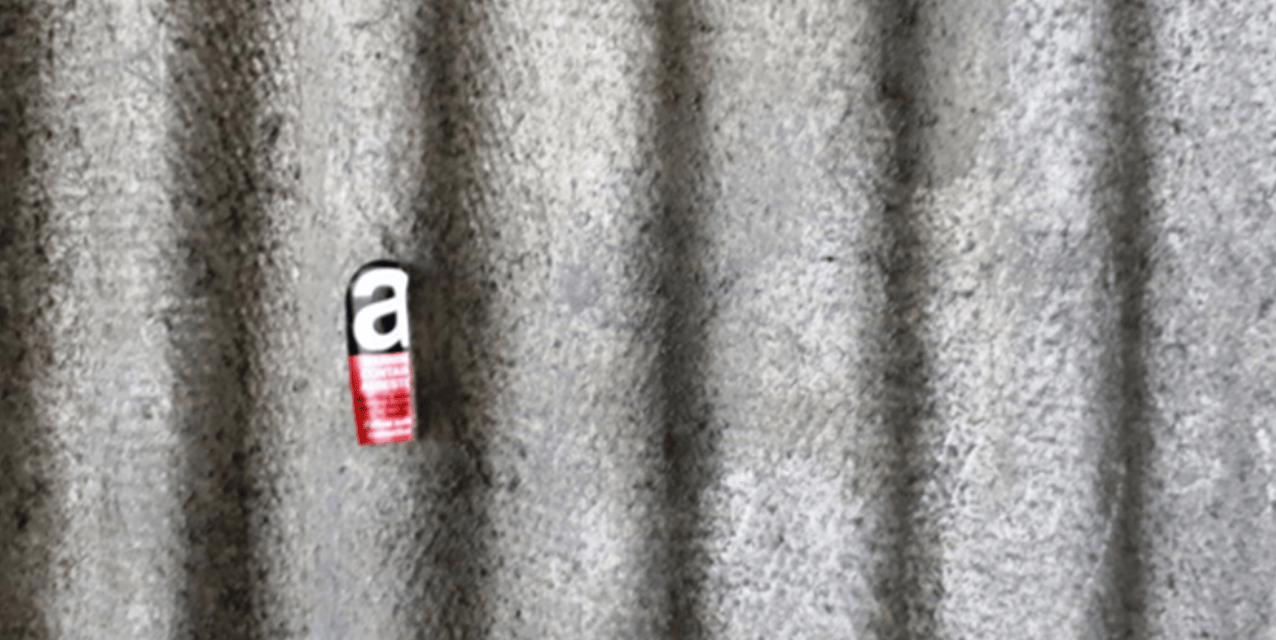
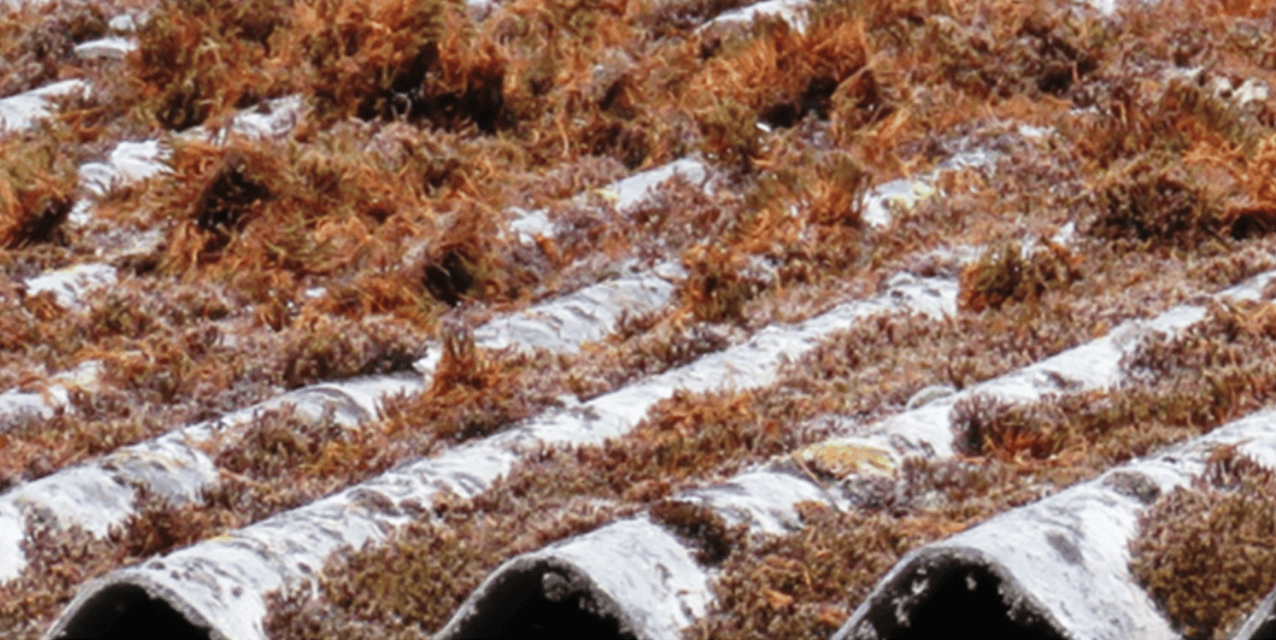
In the case of asbestos corrugated roof sheets, consider the below example photographs. The first photo shows the typical view that an asbestos surveyor may face when inspecting the material. It appears in good condition and will be scored as such within the risk assessment. However, the second photo shows what the external facing surface of the material could look like. The moss covering the surface is evidence that the top layer of the material is degraded, allowing the roots of the moss to penetrate the material. This consideration would result in the material condition score being amended to reflect the degradation and may trigger the recommended action to change from ‘manage’ to ‘remove’.

Consider CAR Regulation 4 (9). It instructs us that the measures specified in the asbestos management plan must include, ‘adequate measures fo…ensuring any asbestos or any such substance is properly maintained or where necessary safely removed’. If a material has exceeded its lifespan, can it still be properly maintained? Should asbestos cement that is showing signs of degradation therefore be planned for safe removal?
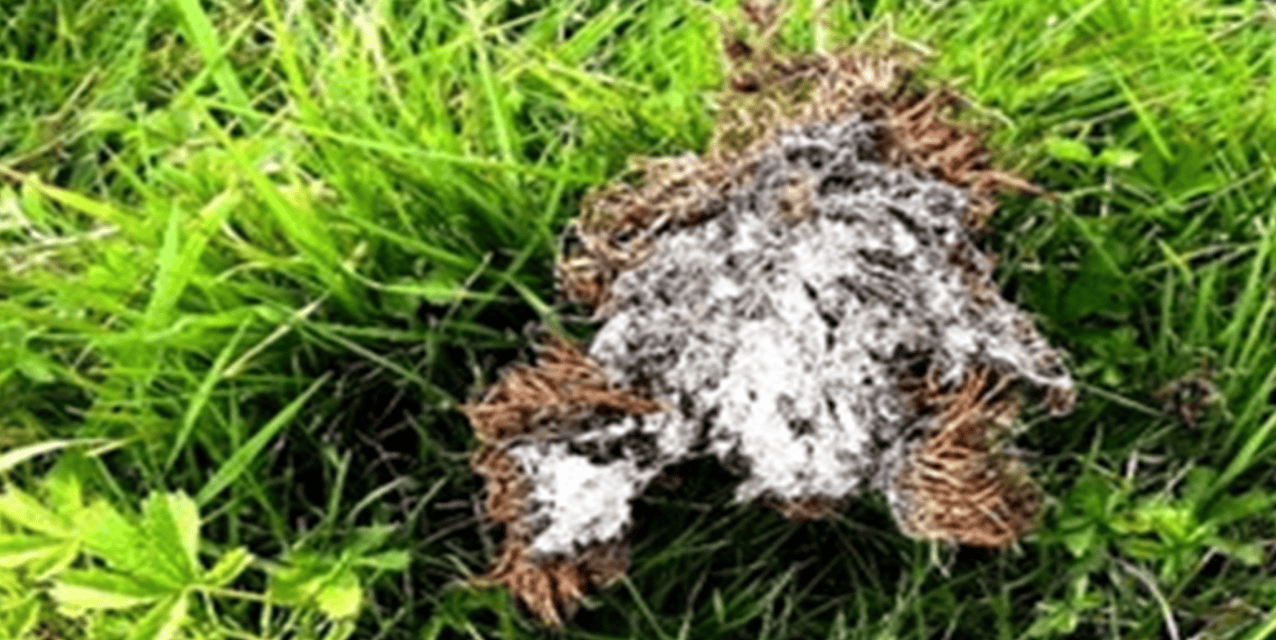
Further, where moss or lichen is present on asbestos cement it presents an additional challenge to effective asbestos management. When the moss/lichens fall off the roof they leave an unsealed surface with loose fibres. The moss can then be easily spread. CAR Regulation 16 stipulates that, ‘employers must prevent or, where this is not reasonably practicable, reduce to the lowest level reasonably practicable the spread of asbestos’.
Planning for the safe removal of asbestos cement roofs with moss/lichen growth is also an effective method of preventing the potential spread of asbestos. Where asbestos cement has previously been likely to have been left in-situ, as evidenced by the volume of the material still present, should we now consider that safe removal may be the most appropriate action in a lot of cases.
When considering works to ground and ballast, asbestos contamination should always be considered. Historic sources of potential asbestos contamination are likely due to the extensive demand on asbestos materials in the rail industry, but the potential contamination from degraded materials left in-situ may also be a source of contamination.
Areas of planned work should be assessed for contamination during a desk-top study. This preliminary assessment should be employed to ascertain the likelihood that asbestos be disturbed during the works. If the asbestos information for the area shows any asbestos materials are being left in-situ, it may be prudent to consider their potential to be releasing fibres, like the moss shown above.
A visit to the site should also be included as part of the preliminary assessment, especially where the available site information is incomplete or unreliable. Neighbouring buildings, structures or assets may have ACMs being managed in-situ that could be a source of potential contamination. Evidence of moss/lichen that has come loose from asbestos cement roofs would suggest evidence of contamination.
Although Regulation 4 makes clear that the management plan must include adequate measures for ‘properly maintaining’ ACMs, the current approach to risk assessments often fails to address the age of the material that is being left in-situ. If the material has exceeded its lifespan then we should expect it to be degrading. Any such material should therefore be planned for necessary safe removal.
By 2039, all of the asbestos cement roof sheets in the UK will have exceeded their average lifespan. Without amending our current approach to their management, we risk potential challenges to legal compliance and ultimately, failing to prevent exposure.
Want to discover more about our services?