
Reservoir Capacity Modelling
for Accurate Storage Assessment
Our reservoir capacity models are built from detailed field surveys and verified digital data, giving clients a clear and auditable understanding of actual storage conditions.
Reservoir capacity modelling combines bathymetric and topographic survey data to provide an accurate picture of reservoir storage capacity. By measuring underwater depths, surrounding ground levels and sediment build-up, SOCOTEC, formerly known as Aspect Land & Hydrographic Surveys Ltd, supports capacity forecasting, supply scheduling and long-term planning for reservoirs, lochs and water storage facilities.

Reservoir Capacity Modelling
Combining survey methods for accurate reservoir models
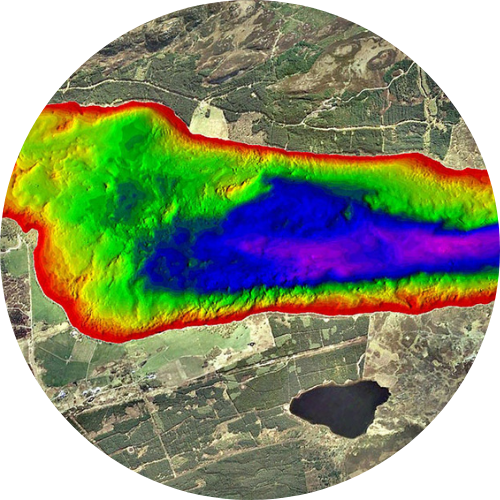
Many reservoirs were designed using historic data that no longer reflects current conditions. Sedimentation, infrastructure changes and operational constraints can significantly reduce usable storage. Reservoir capacity modelling provides the measured data needed to understand current capacity, plan dredging works and support drought resilience planning with confidence.
We deliver reservoir capacity modelling using a combination of complementary survey techniques. Bathymetric surveys capture underwater depth profiles, while topographic surveys define the surrounding basin. Where required, geophysical surveys and sediment sampling are used to assess sediment depth and composition. All data is processed into clear digital models that reflect real site conditions and support practical decision-making.
Many reservoirs were designed using historic data that no longer reflects current conditions. Sedimentation, infrastructure changes and operational constraints can significantly reduce usable storage. Reservoir capacity modelling provides the measured data needed to understand current capacity, plan dredging works and support drought resilience planning with confidence.
We deliver reservoir capacity modelling using a combination of complementary survey techniques. Bathymetric surveys capture underwater depth profiles, while topographic surveys define the surrounding basin. Where required, geophysical surveys and sediment sampling are used to assess sediment depth and composition. All data is processed into clear digital models that reflect real site conditions and support practical decision-making.
Reservoir capacity modelling helps you to:
- Understand true reservoir storage capacity
- Support capacity forecasting and supply scheduling
- Identify sediment build-up affecting usable storage
- Inform dredging scope, planning and disposal options
- Improve confidence in operational and long-term planning
- Reduce uncertainty when managing critical water assets
- Forward planning for drought resilience scenarios
Our reservoir capacity models are built from measured survey data and processed into auditable digital datasets. By combining bathymetric, topographic and sediment investigation techniques, we produce verified Digital Terrain Models and depth–area–capacity relationships that reflect current reservoir conditions.
These outputs give asset owners reliable evidence to support operational planning, sediment management and long-term water resource decisions.
Reservoir Capacity Modelling
Why choose SOCOTEC
Specialist Reservoir Survey Expertise
Our teams combine hydrographic, topographic and geophysical surveying expertise to deliver accurate reservoir capacity models based on measured field data.
Integrated Survey Approach
We combine bathymetric, topographic and sediment investigation techniques to capture the full reservoir basin profile and identify factors affecting usable storage.
Proven Experience in Water Asset Surveys
We support water utilities, infrastructure operators and asset managers with survey data that informs reservoir planning, sediment management and resilience strategies.
Auditable Digital Outputs
All survey data is processed into clear, verifiable Digital Terrain Models and depth–area–capacity datasets suitable for operational use, planning and long-term asset management.
End-to-End Capability
From field surveys through to digital modelling and deliverables, our integrated service ensures consistent data quality and efficient project delivery.
Specialist Reservoir Survey Expertise
Our teams combine hydrographic, topographic and geophysical surveying expertise to deliver accurate reservoir capacity models based on measured field data.
Integrated Survey Approach
We combine bathymetric, topographic and sediment investigation techniques to capture the full reservoir basin profile and identify factors affecting usable storage.
Proven Experience in Water Asset Surveys
We support water utilities, infrastructure operators and asset managers with survey data that informs reservoir planning, sediment management and resilience strategies.
Auditable Digital Outputs
All survey data is processed into clear, verifiable Digital Terrain Models and depth–area–capacity datasets suitable for operational use, planning and long-term asset management.
End-to-End Capability
From field surveys through to digital modelling and deliverables, our integrated service ensures consistent data quality and efficient project delivery.
Find out more
What Is Reservoir Modelling?
Reservoir modelling is the process of using survey data to create a digital representation of a reservoir basin. This model is used to assess depth, area and volume relationships, providing a clear understanding of available storage at different water levels.
How Do You Calculate the Capacity of a Reservoir?
Reservoir capacity is calculated by combining bathymetric and topographic survey data to create a Digital Terrain Model (DTM). From this, depth–area–capacity relationships are derived at defined intervals, allowing total storage volume to be calculated accurately.
How is the Capacity of a Reservoir Measured?
Capacity is measured using a combination of:
- Bathymetric surveys to record underwater depths
- Topographic surveys of embankments and surrounding ground
- Geophysical surveys to assess sediment thickness
- Sediment sampling to determine material composition
Multibeam datasets can also be used to identify submerged infrastructure such as intake pipes and valve towers that influence Top Water Level (TWL) and overall capacity.
Reservoir Capacity Calculation Methods
Capacity data produced through reservoir modelling can support recognised calculation approaches, including mass curve methods used for supply planning and drought assessment. Accurate depth–capacity data ensures these calculations are based on current reservoir conditions.
A reservoir capacity formula is commonly used to describe the relationship between water depth, surface area and stored volume. In practice, this calculation relies on an accurate representation of the reservoir’s geometry. By combining bathymetric and topographic survey data to create a Digital Terrain Model (DTM), reservoir capacity can be calculated reliably at defined depth intervals, providing a clear and auditable basis for planning and decision-making.
What are the Different Types of Reservoir Models?
We deliver reservoir models that support:
- Depth–capacity and volume assessment
- Sedimentation analysis
- Infrastructure-aware capacity modelling
- Capacity verification for planning, scheduling or dredging works
All models are derived from measured data and presented in formats suitable for verification and reuse.
Deliverables & Results
Typical outputs include:
- 2D and 3D survey drawings
- AutoCAD and PDF files
- XYZ datasets (Easting, Northing and Level)
- Digital Terrain Models (DTMs)
- Graphical and tabulated depth, area and capacity data
These outputs provide a clear, auditable record of reservoir storage at defined depth intervals.


Discover latest News & Media

Geophysics to Support Ground Investigation: Reduce Risk and Improve Ground Understanding

Brownfield Suite of Testing - From India to the UK

Fire Strategies in Complex Buildings
Hydrographic Surveying: More Than Just Mapping the Seabed


How ecology surveys can keep your railway project on track