
Dye Tracing and
Drogue Tracking Surveys
Our oceanographic teams deliver dye tracing and drogue tracking surveys using sensitive fluorometers, RTK GNSS positioning and proven offshore survey methods to capture data that cannot be obtained through observation or modelling alone.
Tracking and tracing tidal, river and coastal water flows using fluorescent dyes and surface drogues provides critical information on current behaviour and dispersion characteristics. Dye tracing and drogue tracking surveys allow SOCOTEC, formerly known as Aspect Land & Hydrographic Surveys Ltd, to quantify how water moves through natural systems, supporting environmental studies, outfall assessments and pollution investigations across freshwater, estuarine, coastal and offshore environments.

Dye Tracing and Drogue Tracking Surveys
Why dye tracing and drogue tracking surveys matter for environmental studies
Where water receives effluent discharges, supports infrastructure or transports contaminants, understanding how it flows and disperses is essential. Dye tracing and drogue tracking surveys provide direct, field-based evidence of water movement, enabling informed environmental assessment, improved design and reduced uncertainty in complex hydrodynamic environments.
How our dye tracing and drogue tracking surveys are delivered
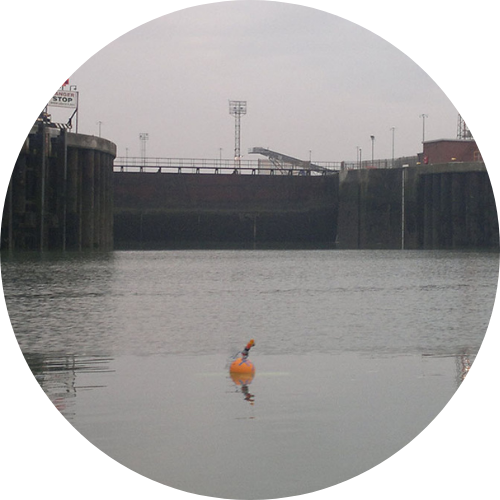
We design and deliver dye tracing and drogue tracking surveys based on site conditions, water clarity and study objectives. Fluorescent dye is released in controlled quantities and tracked for periods of up to twelve hours, depending on dispersive properties. Surveys are delivered from a dedicated survey vessel, allowing real-time monitoring, adaptive sampling and accurate plume delineation.
Where water receives effluent discharges, supports infrastructure or transports contaminants, understanding how it flows and disperses is essential. Dye tracing and drogue tracking surveys provide direct, field-based evidence of water movement, enabling informed environmental assessment, improved design and reduced uncertainty in complex hydrodynamic environments.
How our dye tracing and drogue tracking surveys are delivered
We design and deliver dye tracing and drogue tracking surveys based on site conditions, water clarity and study objectives. Fluorescent dye is released in controlled quantities and tracked for periods of up to twelve hours, depending on dispersive properties. Surveys are delivered from a dedicated survey vessel, allowing real-time monitoring, adaptive sampling and accurate plume delineation.
Our dye tracing and drogue tracking surveys enable you to:
- Understand tidal, river and coastal water flows
- Quantify dispersion and dilution from discharges and outfalls
- Identify leakage between rivers, watercourses or infrastructure
- Support pollution investigations and contaminant tracing
- Improve confidence in environmental assessments and modelling
- Reduce uncertainty in coastal and offshore project design
Our dye tracing and drogue tracking surveys deliver direct, field-based measurements of water movement that cannot be obtained through modelling alone. Using fluorometers, RTK GNSS positioning and controlled dye releases tracked for up to 12 hours, our surveys capture real-time plume behaviour, dispersion patterns and dilution rates to support environmental assessments, outfall design and pollution investigations.
Dye Tracing and Drogue Tracking Surveys
Why choose SOCOTEC
Specialist Oceanographic Survey Capability
We deliver dye tracing and drogue tracking surveys using sensitive fluorometers, RTK GNSS positioning and dedicated survey vessels, enabling accurate measurement of water flow, dispersion and dilution in complex environments.
Proven Field-Based Survey Methods
Our surveys capture real-world hydrodynamic behaviour through controlled dye releases and GNSS-tracked drogues, providing reliable data that cannot be obtained through modelling or visual observation alone.
Real-Time Plume Monitoring
Fluorometers integrated with survey software and RTK GNSS positioning allow dye concentration and drogue positions to be monitored in real time, enabling adaptive survey control and accurate plume delineation during live operations.
Experience Across Freshwater and Marine Environments
Our teams deliver dye tracing and drogue tracking surveys across rivers, estuaries, coastal waters and offshore environments, supporting environmental assessments, outfall studies and pollution investigations.
Integrated Environmental Survey Expertise
Drawing on our heritage in hydrographic and environmental surveying, our teams combine oceanographic expertise with practical survey delivery to produce reliable datasets for environmental reporting and project design.
Specialist Oceanographic Survey Capability
We deliver dye tracing and drogue tracking surveys using sensitive fluorometers, RTK GNSS positioning and dedicated survey vessels, enabling accurate measurement of water flow, dispersion and dilution in complex environments.
Proven Field-Based Survey Methods
Our surveys capture real-world hydrodynamic behaviour through controlled dye releases and GNSS-tracked drogues, providing reliable data that cannot be obtained through modelling or visual observation alone.
Real-Time Plume Monitoring
Fluorometers integrated with survey software and RTK GNSS positioning allow dye concentration and drogue positions to be monitored in real time, enabling adaptive survey control and accurate plume delineation during live operations.
Experience Across Freshwater and Marine Environments
Our teams deliver dye tracing and drogue tracking surveys across rivers, estuaries, coastal waters and offshore environments, supporting environmental assessments, outfall studies and pollution investigations.
Integrated Environmental Survey Expertise
Drawing on our heritage in hydrographic and environmental surveying, our teams combine oceanographic expertise with practical survey delivery to produce reliable datasets for environmental reporting and project design.
Dye tracing and drogue tracking survey methods explained
What is dye tracing?
Dye tracing is used to determine the dispersal characteristics of natural waters. Non-toxic fluorescent dye is introduced into a water body and tracked over time to measure flow direction, velocity, dispersion and dilution. Surveys may be qualitative or quantitative, depending on project requirements.
What dye is used to trace water flow?
Common fluorescent dyes include Rhodamine WT, Fluorescein and PTSA. These dyes are selected for their detectability, non-toxic properties and suitability for specific environmental conditions. Custom dyes may also be used where unique properties are required.
Does water tracing dye stain?
Environmental dye tracing does not permanently stain water or the environment. Dyes are released in controlled quantities and dilute rapidly within natural water systems.
Dye plumes, concentrations and dilution
During coastal dispersion studies, dye concentration levels within the plume are recorded to determine dilution rates. Sensitive fluorometers measure fluorescence levels, providing data sets not achievable through visual methods alone.
Fluorometers and survey vessel setup
Fluorometers are mobilised onboard a survey vessel and positioned below the waterline, typically via a moon-pool configuration. This shaded environment helps eliminate sunlight interference. Sensors are additionally fitted with shades to ensure only dye concentration in the sampled water is measured.
Drogue tracking surveys
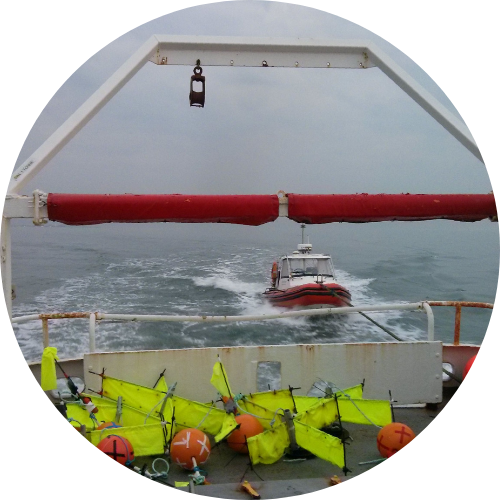
Once a dye patch begins to spread, surface drogues are deployed along the major axis of the plume. Drogues are colour-coded — typically red upstream and blue downstream — and tracked using GNSS loggers to define plume extents and movement over time.
Positioning and real-time data
RTK GNSS positioning is integrated with fluorometers and sampling software, allowing dye concentrations and drogue positions to be viewed in real time. This enables immediate assessment of plume behaviour and adaptive survey control.
Typical applications
Dye tracing and drogue tracking surveys are commonly used for:
- Outfall discharge mapping and dispersion studies
- Pollution and contaminant investigations
- Stormwater and sewer drainage analysis
- River, estuary, coastal and offshore flow studies
- Pipeline route tracing and leak detection
- Supporting surface and groundwater modelling


Discover latest News & Media
Geophysics to Support Ground Investigation: Reduce Risk and Improve Ground Understanding
Brownfield Suite of Testing - From India to the UK
Fire Strategies in Complex Buildings
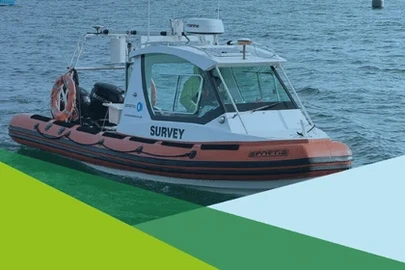
Hydrographic Surveying: More Than Just Mapping the Seabed


How ecology surveys can keep your railway project on track