

The hidden regulatory cost of adding Air Conditioning to existing buildings.
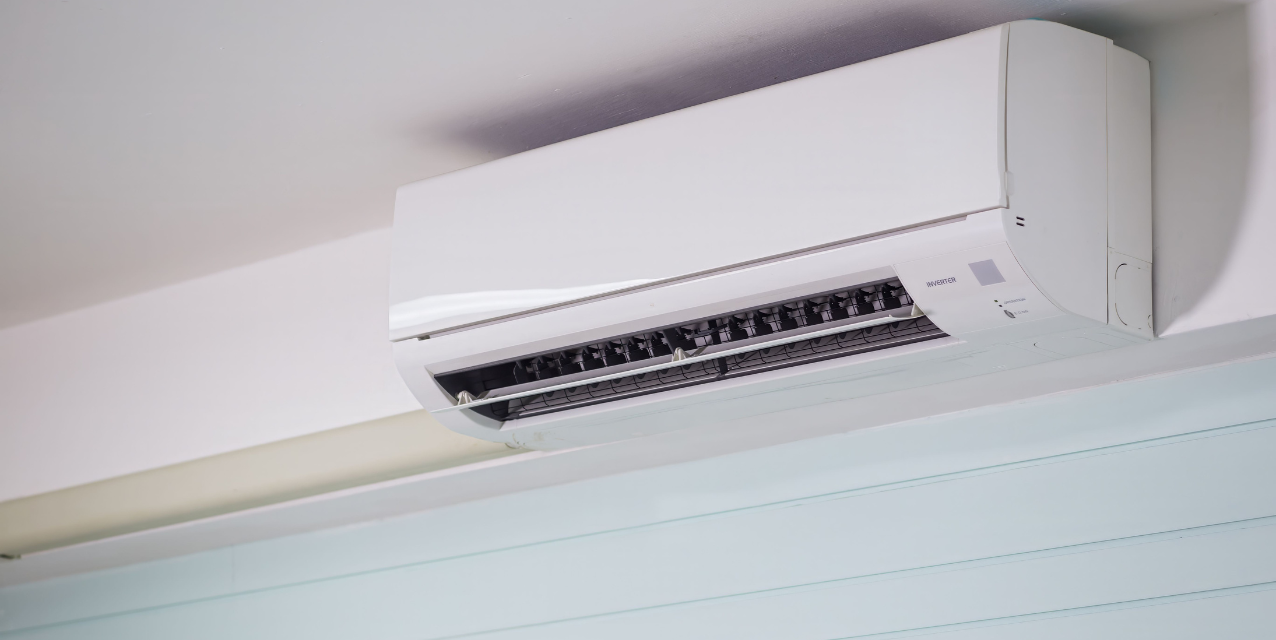
When a building owner decides to install air conditioning in an existing non-domestic building, the conversation usually focuses on plant selection, pipe and ductwork routing and capital cost.
What is often overlooked, until it derails a project's budget or schedule, is that this seemingly simple intervention can trigger a much wider set of regulatory obligations sitting towards the end of Part L Vol2 (2021). These are the "Consequential Improvements" provisions in response to Regulation 28.
The trigger conditions are easy to miss, due to their specificity that buildings must have a total useful floor area over 1000m², and the consequential improvements requirement is triggered when a fixed building service, such as cooling/air conditioning is installed for the first time or has its installed capacity increased.
Once triggered (per clause 12.6), the regulation demands action on two fronts simultaneously, with this dual requirement being where many projects underestimate its scope.
Services upgrades, discussed in Clause 12.6a, require energy efficiency improvements to the fixed building services themselves, wherever technically, functionally and economically feasible. It is worth noting there is a cost-based threshold, which means the value of these improvements must not be less than 10% of the value of the principal works.

Feasibility is generally assessed using a 15-year simple payback for most measures, as per items 1–7 in Appendix Table D1, though item 8 (renewable energy generation) uses a shorter seven-year payback due to an assumed higher capital cost and risk profile.
Improvements captured in Clause 12.6b & Appendix Table D2 focus on measures to the fabric, glazing and solar control (but also include the general lighting) of the parts of the building served by the new or upgraded cooling system.
This is the aspect most likely to catch project teams by surprise, with no cost cap or threshold tied to the value of the principal works. Instead, the rule is that all technically, functionally and economically feasible measures must be implemented, regardless of how much the fabric works cost relative to the cooling installation itself.
The key practical difference is that Table D1 is anchored to a percentage of the cooling project's own cost, a bounded, calculable figure, while Table D2 (fabric) has no such ceiling.
Where glazing, insulation or solar shading improvements to the cooled zones are deemed feasible, they must be carried out in full, even if this significantly exceeds the cost of the air conditioning installation itself.
This asymmetry means a modest cooling upgrade could, in principle, obligate a client to undertake substantial and costly fabric works, an outcome rarely anticipated at the initial scoping stage.
Before or at the point Building Control is informed of the proposals (via initial notice or deposit of plans), a chartered quantity surveyor or other suitably qualified person must produce a signed report establishing the value of the principal works and of the required consequential improvements.
Valuations must use the current prices at the notification date. This upfront reporting obligation means the financial and technical implications of Regulation 28 need to be assessed before construction begins, not retrofitted into the project once air conditioning has already been specified.
The regulation also addresses edge cases. For example, increasing the size of central boiler plant to serve a new extension does not generally count as ‘increasing installed capacity per unit area’ of a fixed building service, unless the heating provision in the existing building is also increased at the same time.
Even in such cases where clause 12.6 doesn't apply, the extension itself may still trigger consequential improvement obligations under clauses 12.3–12.5, subject to the same 10% principal works value threshold.
Adding air conditioning to an existing building over 1000m² is never just a mechanical services decision. It is a regulatory trigger with two layers of consequence: a bounded services upgrade obligation and an unbounded fabric improvement obligation.
Project teams, designers and building owners should factor this into early feasibility studies and cost planning, including engaging a qualified quantity surveyor at the outset to establish likely value thresholds and avoid unwelcome surprises once building control engagement begins. It’s also worth noting that there is no change to this approach in the updated Part L (2026) so this is an approach which is here to stay.
SOCOTEC’s B&RE team are well placed to advise clients on the impacts of this regulation, as well as others within the Approved Documents.
Contact our Sustainability team today for more information.
Discover more of our latest News & Media

LEED in Practice: Sustainable Luxury in the Miami Design District
How Antidisciplinary thinking can help you repurpose your buildings

Ecology – A Green Trust Service

Understanding Today's Leading Sustainability Assessments: BREEAM, WELL & LEED

Sustainability - Building compliance Explained
ESOS Action Plan Update Reminder