Need some advice?
Leave your details and we will get in touch.
I want to be contacted by an expert
1 /

Building managers know fire alarms need testing, sprinkler systems receive annual inspections and emergency lighting is checked frequently. But there's one crucial fire safety component that is being dangerously overlooked across the UK: fire dampers.

While an exact nationwide percentage of completely untested individual fire dampers is unknown, the Building Engineering Services Association (BESA) estimates that less than 1% of UK buildings are thoroughly tested and fully compliant with current legal requirements. This means there are millions of properties across the UK that are entirely untested or unmonitored.
For fire dampers in particular, when they are finally inspected, up to 70% of fire dampers fail initial inspections due to blockages, rust, or incorrect installation.
But what can be done about this ongoing situation, and how can compliance be achieved? Let’s start from the beginning.
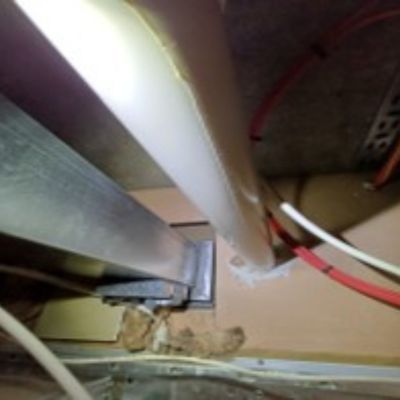
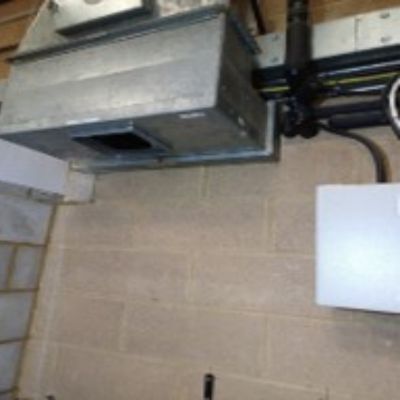
Fire dampers are automated safety devices installed within ventilation ducts, where they pass through fire-resistant walls, floors, or partitions, meaning they can be tough to reach, too.
Their sole purpose is to prevent fire and smoke from spreading through your building's ductwork, essentially maintaining the integrity of fire compartmentation that protects lives and property.
When a fire breaks out, these dampers are designed to automatically close, sealing off ventilation pathways and containing the fire to a single compartment. In doing so, this buys critical time for evacuation and emergency response.
But here's the problem: if a fire damper hasn't been tested and maintained, there's no guarantee it will work when needed.
Fire dampers are automated safety devices installed within ventilation ducts, where they pass through fire-resistant walls, floors, or partitions, meaning they can be tough to reach, too.
Their sole purpose is to prevent fire and smoke from spreading through your building's ductwork, essentially maintaining the integrity of fire compartmentation that protects lives and property.
When a fire breaks out, these dampers are designed to automatically close, sealing off ventilation pathways and containing the fire to a single compartment. In doing so, this buys critical time for evacuation and emergency response.
But here's the problem: if a fire damper hasn't been tested and maintained, there's no guarantee it will work when needed.
Under the Regulatory Reform (Fire Safety) Order 2005, building owners and managers, designated as “Responsible Persons”, have a legal duty to ensure all fire safety equipment is properly maintained and functional – which explicitly includes fire dampers.
Further legislation introduced over the last few years has solidified these requirements for employers.
The Fire Safety Act 2021 extended the scope of fire safety regulations to include building structure and external walls, while the Building Safety Act 2022 introduced stricter accountability and the concept of a ‘golden thread’ of safety information.
Industry standard BS 9999 clearly states that fire dampers should be tested annually to ensure operational readiness. Yet despite these clear legal and regulatory requirements, a staggering proportion of UK buildings are operating with completely untested dampers.
The implications of non-compliance extend far beyond regulatory breaches. For example, untested dampers could be impacted by construction debris, have a corroded fusible link, or be improperly aligned. In a fire scenario, this could be fatal, as it might not close - allowing flames and toxic smoke to spread rapidly through ductwork to other floors and compartments.
If this scenario were to occur and a post-accident investigation revealed that dampers failed due to lack of maintenance, the Responsible Person can face a series of punishments, including:
Many building insurance policies contain clauses requiring compliance with fire safety regulations. The discovery of untested fire dampers could void your insurance coverage entirely, resulting in denied claims following a fire, as well as leading to dramatically increased premiums once the issue is identified.
For commercial property owners, healthcare facilities, educational institutions, and hospitality venues, a fire safety failure makes headlines. The reputational cost can far exceed the financial impact.
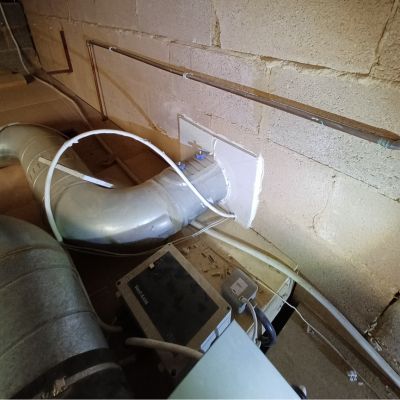
Testing fire dampers isn't as simple as pulling a lever, a comprehensive inspection consists of a whole range of criteria.
From assessing the manual release testing to verify the damper closes fully and smoothly, to the fusible link inspection to ensure the correct temperature rating and proper condition.
Expert inspectors then require access to the panel assessment, to confirm adequate size for future maintenance. We then need to check for debris removal and that the cleaning of damper blades and frames is adequate.
Penetration seal integrity checks in the damper installation, as well as photographic documentation of conditions before and after testing is recorded, with everything being digitally reported to provide a complete compliance record.
At SOCOTEC UK & Ireland, we go beyond, with our inspectors evaluating each damper within the context of your building's overall compartmentation strategy, identifying not only obvious failures but potential vulnerabilities that could compromise safety in a real fire scenario.

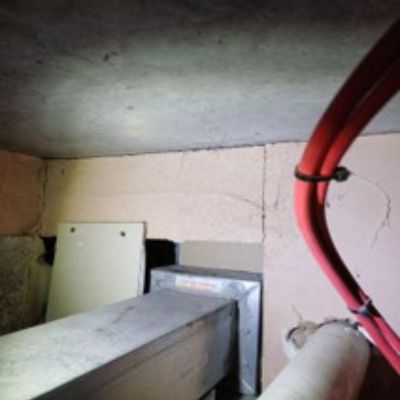
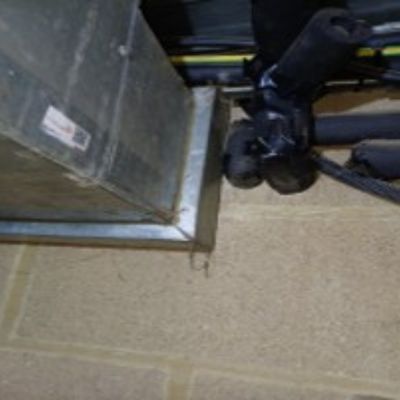
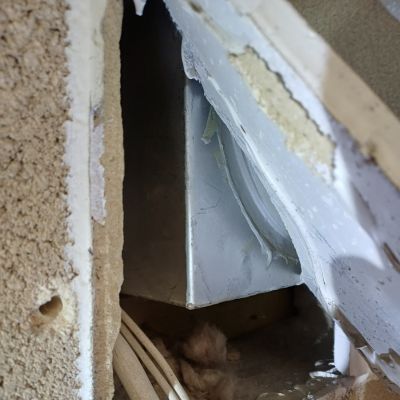
Identify all damper locations within your building (we can help with this if records are incomplete)
Implement annual testing in line with BS 9999 recommendations
Maintain comprehensive records of testing, repairs and certifications
Engage qualified inspectors who understand the full regulatory landscape
We don't just test dampers, we help building managers develop sustainable compliance strategies that protect occupants, satisfy regulators and provide genuine peace of mind.
We know the number of fire dampers in the UK that have never been tested represents thousands of buildings operating with a hidden vulnerability. But fire doesn't announce its arrival in advance, and when it strikes, it's too late to discover that your compartmentation strategy has a fatal flaw.
Contact SOCOTEC UK & Ireland today to schedule a comprehensive fire damper inspection and take the first step toward genuine compliance and safety.