Need some advice?
Leave your details and we will get in touch.
I want to be contacted by an expert
1 /

There are currently two recognised routes for fire resistance classification within Approved Document B in England: the National Classes associated with the BS 476 series and the European classification system under BS EN 13501-2.

However, this is set to change...From 2 September 2029, references to the BS 476 National Classes for fire resistance will be removed from Approved Document B in England. From that point, the European classification system will become the sole route of specification for fire resistance classifications within Approved Document B, subject to the Government’s published transitional arrangements.
It is important, however, to distinguish this change from the wider status of the BS 476 standards themselves.
BS 476 has a long history within UK fire safety, having first been published in 1932. Over time, the series developed to cover numerous aspects of fire performance, including the fire resistance test methods contained within BS 476 Parts 20–24.
As European fire testing and classification standards were introduced, parts of the BS 476 series were superseded by their European equivalents. BSI has explained that its continued membership of CEN means that conflicting national standards are subject to CEN’s rules, irrespective of the UK’s departure from the European Union.
The Government’s 2029 change is therefore specifically about the removal of BS 476 references from Approved Document B in England. It should not be interpreted simply as BS 476 becoming unusable throughout the whole of the United Kingdom. Scotland, Wales and Northern Ireland operate under their own building regulations and associated guidance.
For England, however, the direction is clear.
The 2029 version of Approved Document B uses the European REI classification system, set out in BS EN 13501-2 to 4, with fire resistance expressed in terms of loadbearing capacity (R), integrity (E) and insulation (I). Importantly, Approved Document B also makes clear that products and systems cannot typically assume a European classification unless they have been tested and classified accordingly.
It is important, however, to distinguish this change from the wider status of the BS 476 standards themselves.
BS 476 has a long history within UK fire safety, having first been published in 1932. Over time, the series developed to cover numerous aspects of fire performance, including the fire resistance test methods contained within BS 476 Parts 20–24.
As European fire testing and classification standards were introduced, parts of the BS 476 series were superseded by their European equivalents. BSI has explained that its continued membership of CEN means that conflicting national standards are subject to CEN’s rules, irrespective of the UK’s departure from the European Union.
The Government’s 2029 change is therefore specifically about the removal of BS 476 references from Approved Document B in England. It should not be interpreted simply as BS 476 becoming unusable throughout the whole of the United Kingdom. Scotland, Wales and Northern Ireland operate under their own building regulations and associated guidance.
For England, however, the direction is clear.
The 2029 version of Approved Document B uses the European REI classification system, set out in BS EN 13501-2 to 4, with fire resistance expressed in terms of loadbearing capacity (R), integrity (E) and insulation (I). Importantly, Approved Document B also makes clear that products and systems cannot typically assume a European classification unless they have been tested and classified accordingly.
This represents more than simply changing from one test standard to another. Manufacturers, specifiers and those responsible for supporting product performance will need to understand how their existing evidence translates into the European testing and classification framework, and whether their current evidence will support the applications they intend to place on the market in the future.
With September 2029 now less than three years away, understanding the transition from BS 476 evidence to the European testing and classification framework is becoming increasingly important.
The question for manufacturers shouldn’t simply be “When does BS 476 go?” but rather: “Will the evidence we are generating today support the products we want to supply after 2029?”
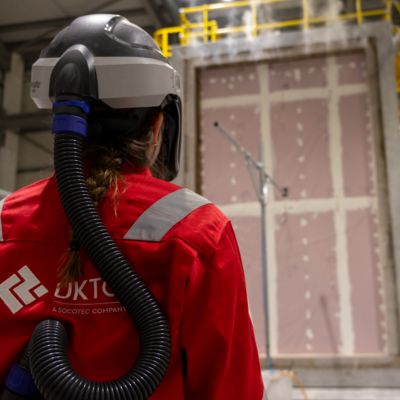
For more information regarding UKTC, a SOCOTEC Company’s, fire resistance testing and compliance services, please contact us.