Need some advice?
Leave your details and we will get in touch.
I want to be contacted by an expert
1 /

SOCOTEC UK and Ireland’s Water Quality team is full of career professionals who have dedicated their profession to transforming how water quality information is collected, interpreted, and communicated to stakeholders.

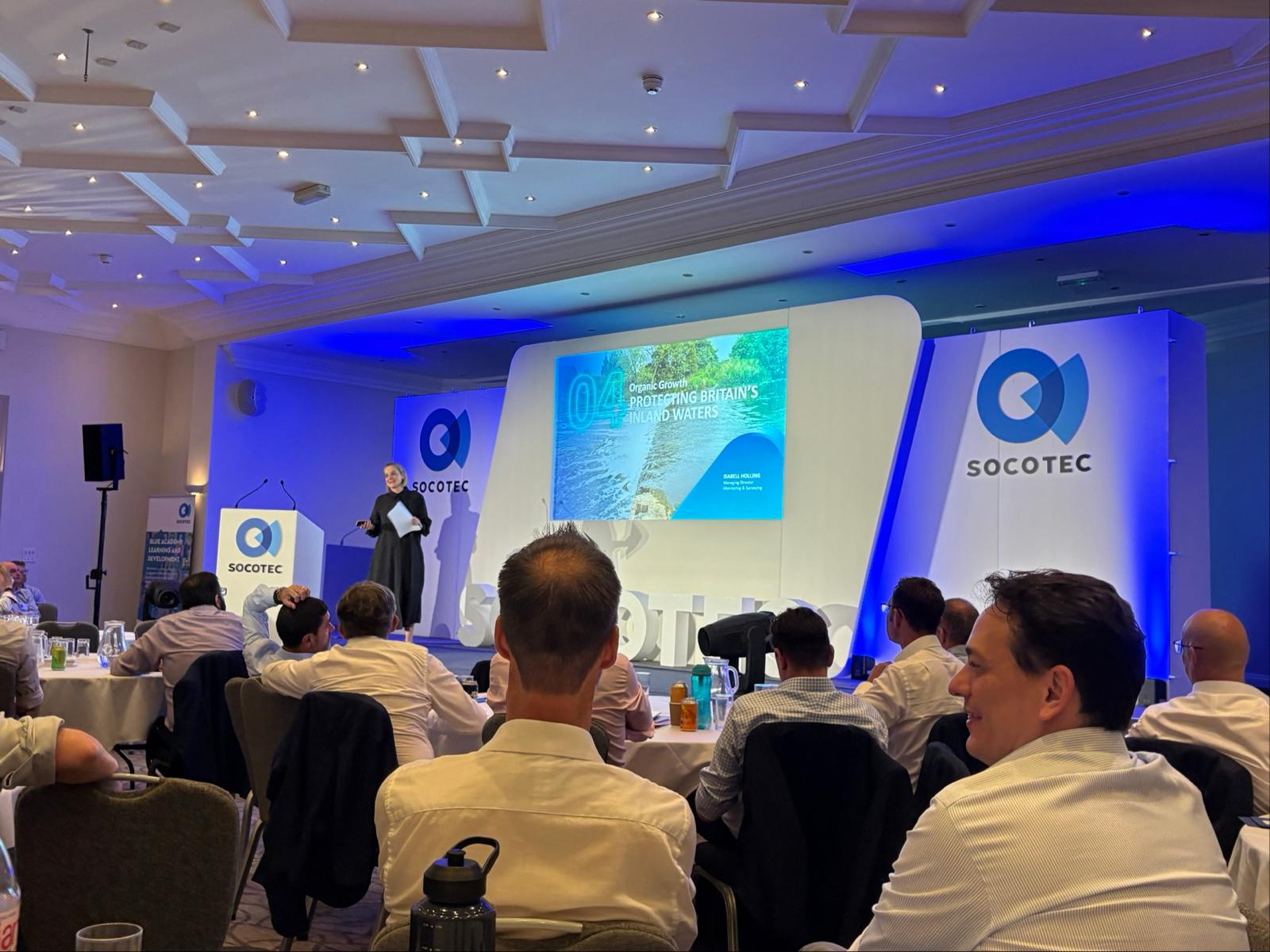
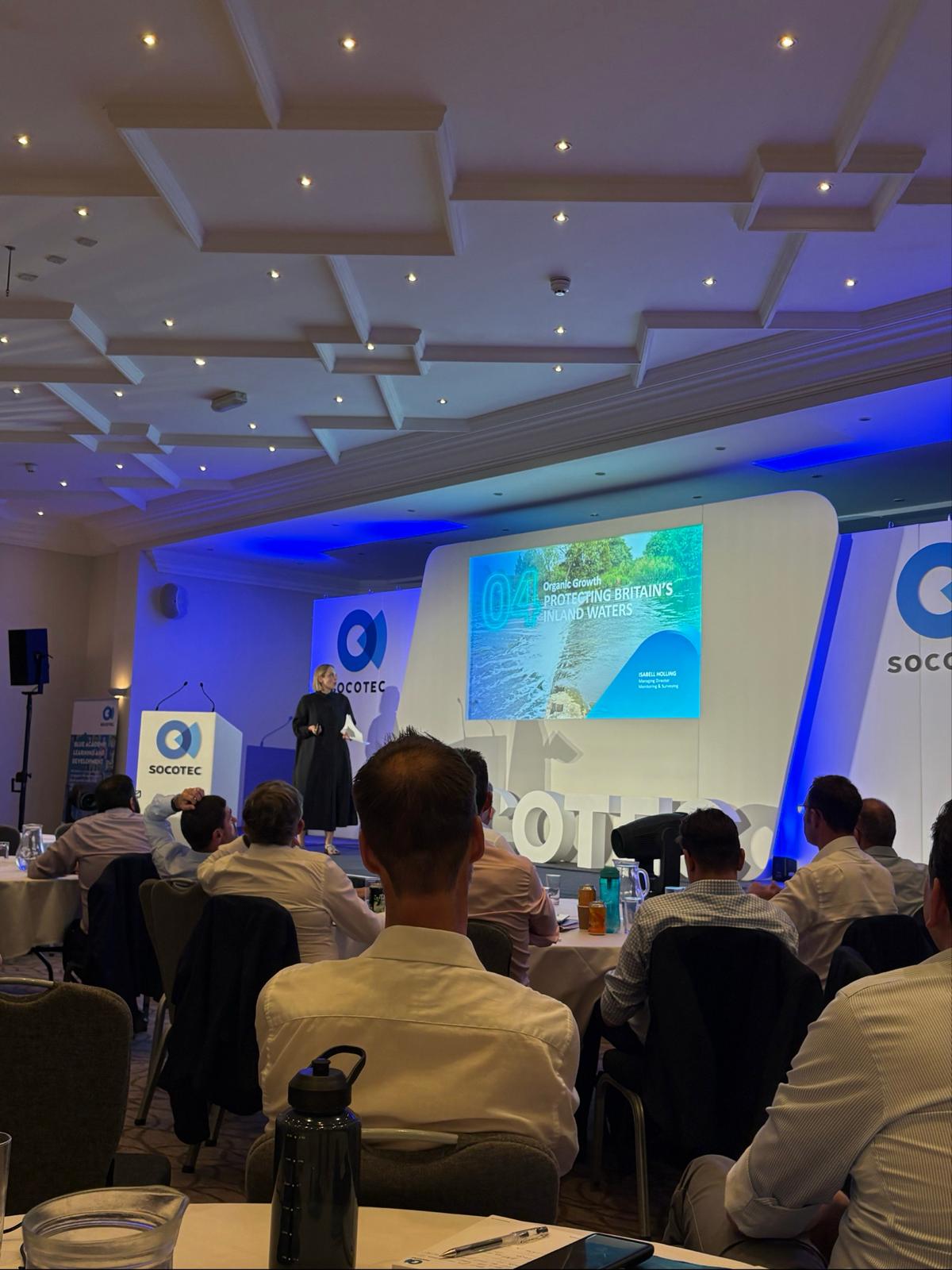
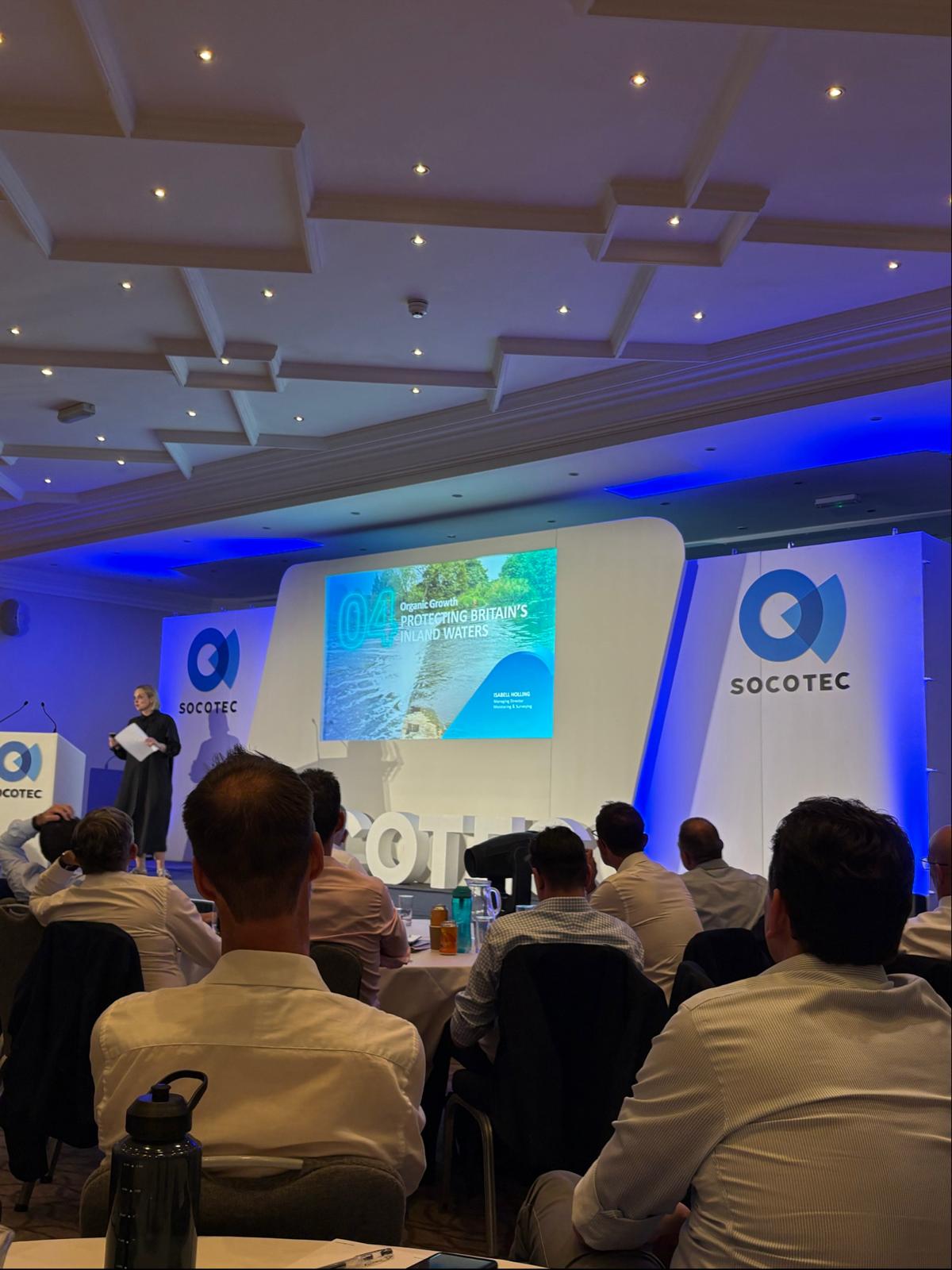
Isabell Holling is Managing Director of Monitoring & Surveying at SOCOTEC UK & Ireland and oversees the work of the Water Quality team.
We sat down with Isabell to explore her thoughts on the ever-shifting landscape of water monitoring technology, as well as the challenges of making complex environmental data accessible to everyone.
“I quickly realised that the main difficulty does not lie solely in data collection, but in sifting through and understanding the data. Our team are experts in the collection of good quality data. It is a skillset we have honed over several years, but what is important to consider is that the raw data is very hard to understand.
“Our sensors generate large volumes of highly technical information that can be difficult for the average user to interpret. The main issue is that data which cannot be translated into learnings is pretty much useless.
“A large part of the challenge is to ensure all stakeholders understand the data we are collecting, through the meaning we give it. The raw data a sensor produces only makes sense within context, isolated figures convey very little alone. It must be compared with suitable thresholds, historical trends and other parameters which are measured simultaneously. It is this process of correlation and contextualisation that allows measurement to be transformed into helpful information.”
“In the world of water quality, it is important to portray the different elements as that make up data as clearly as possible – to do otherwise and showcase them in a disconnected way complicates interpretation and can lead to misunderstandings. With that in mind, at SOCOTEC, we aim to bring them together within a single visualisation environment, which helps us to see the bigger picture.
“Our own web-based platform, Blue Trust Monitoring, is designed to address this challenge. By consolidating real-time data from multiple sensors and monitoring points into one unified interface, the platform enables water quality professionals to observe trends, correlations, and anomalies that might otherwise remain hidden in fragmented datasets. This holistic approach is essential when dealing with the complexity of water quality parameters, from turbidity and pH levels to dissolved oxygen and contaminants, all of which interact dynamically within water systems.
“Making data usable is therefore just as critical in ensuring its reliability. It requires careful attention to detail in the way data is presented in user interfaces, and an understanding that not all users require the same level of detail. Some expect clear and actionable alerts, while others require access to detailed datasets. We must be able to accommodate these differentiated uses without losing overall coherence.”

“Artificial intelligence should be viewed as a tool for anticipation, not as an end in itself. Its value lies in its ability to enhance the reliability of existing systems and improve decision-making, without obscuring the complexity of the phenomena being observed. Once again, the challenge is not to multiply technologies, but to integrate them coherently within an overall monitoring strategy.”
“Beyond technical and operational challenges, access to information is a central issue. Measuring water quality only makes sense if the results can be understood by those who are directly concerned, yet the issue remains, environmental data is often complex, highly technical and tricky for the public to interpret.
“In the UK, new requirements for continuous monitoring have increased data production, particularly on discharges, bacterial presence and major pollution events. While much of this information is to be made publicly available, formal transparency doesn’t, however, guarantee real understanding.
“A concentration measured above a given threshold may be perceived as an immediate danger, even when it reflects natural variability or a controlled situation. Conversely, genuinely problematic situations may go unnoticed due to a lack of clear, intelligible indicators. The challenge, therefore, is to translate complex parameters into understandable messages without distorting their meaning.”
“It is therefore essential to make information more accessible, notably in collaboration with partners who are artificial intelligence and data mediation specialists. The objective is not to oversimplify but offer different levels of interpretation tailored to users and audiences. A citizen does not require the same level of detail as an engineer or a regulator.
“Making information accessible also helps foster a better understanding of risk. Not all pollution events have the same severity or implications.
“This dimension is becoming increasingly important. As environmental data becomes more abundant and visible, how it is interpreted becomes more of a democratic issue.”
“In this context, monitoring can no longer be seen solely as a technical tool, it becomes a means of dialogue between experts, decision-makers and the general public. Providing access to information also means acknowledging and explaining its limits and uncertainties, as well as its potential future. Only under these conditions can transparency contribute to a better standard of water quality management.”
This blog has been published using quotes from SOCOTEC’s recent white paper – “Water in a Changing World”. To download and read the full white paper, please click here.
Want to find out more about...