Need some advice?
Leave your details and we will get in touch.
I want to be contacted by an expert
1 /

The railway industry is often a loud place to work. From the screech of wheel-on-rail contact and engine noise, to track machinery, ballast tampers, angle grinders, impact wrenches and depot workshops, noise is a constant companion for many railway employees. What is often less visible is the cumulative damage this exposure can do.

Noise-induced hearing loss (NIHL) develops gradually, is permanent and is irreversible once it occurs. Unlike a visible injury, hearing loss is easy to underestimate until it has already taken hold, making early identification of risks and correct implementation of controls essential.
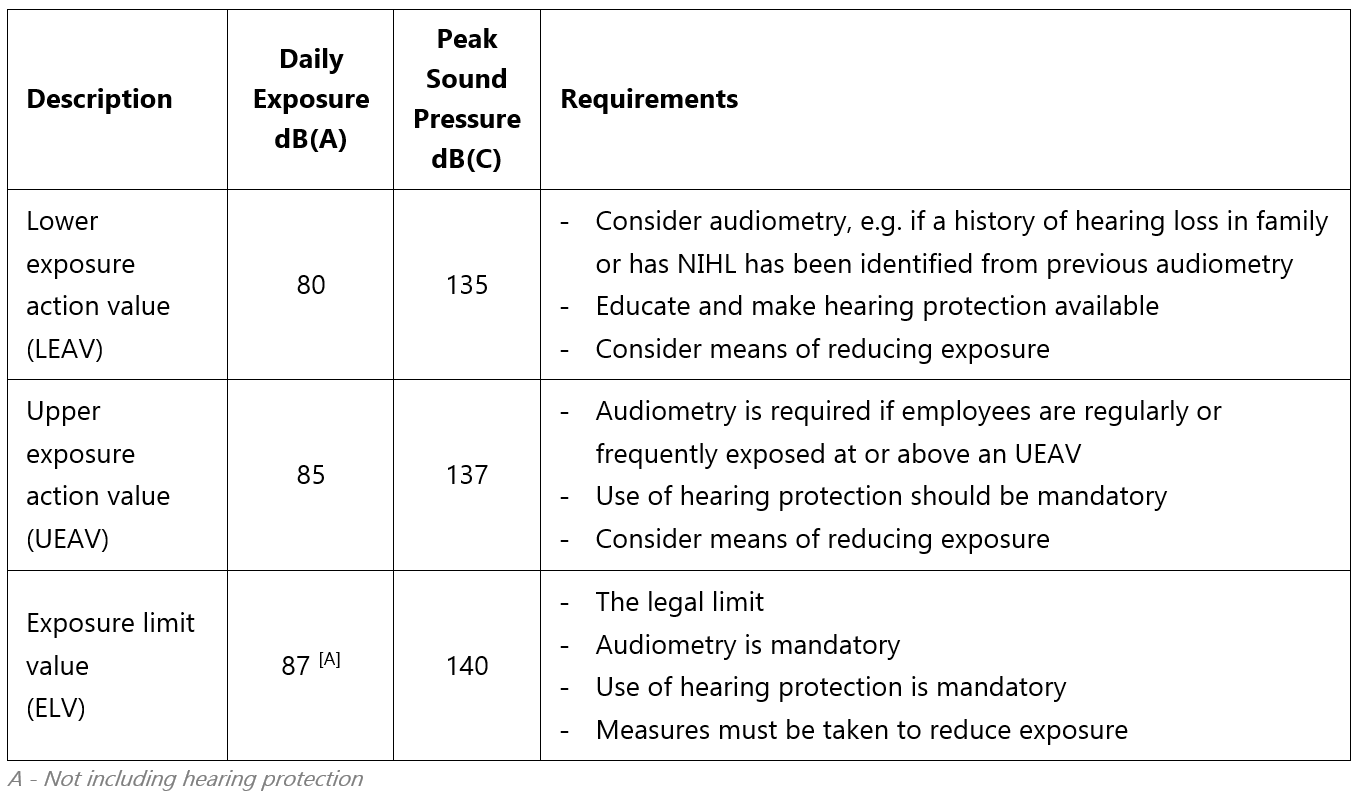
The Control of Noise at Work Regulations (2005) have a set of progressive exposure thresholds at which different duties are required. These thresholds are based on daily exposure and peak sound pressure which are evaluated separately.
A practical, non-technical way to gauge noise levels on site is the conversation test: if you must raise your voice to talk to someone an arm's length away, you are likely in an environment requiring at least basic hearing protection awareness; if you cannot hold a normal conversation at that distance without shouting, protection is almost certainly required.
However, this method should only be used as an indicator of noise exposure. A more thorough way of assessing noise exposure is to have a noise assessment undertaken by a competent professional (such as an Occupational Hygienist or Acoustician) who will use a sound level meter and dosimeters to quantify employee exposure as well as advise on additional control measures and evaluate the adequacy of hearing protection.
Noise-induced hearing loss is a significant occupational health risk in the railway industry, with exposure to elevated noise levels a regular issue for railway workers. It rarely results in a single dramatic incident; instead, it accumulates silently across shifts, years and careers. By the time symptoms are noticeable, the damage is usually already established and cannot be reversed.
Where identified as an issue, controls must be put in place to reduce employee exposure, and implementation of controls should follow the hierarchy of control.
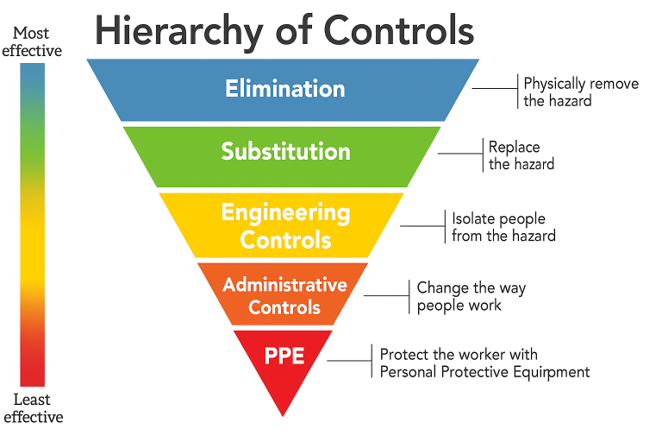
Image Source – Wikipedia
Despite best efforts, the use of hearing protection is commonly also required, either whilst permanent controls are being implemented or as part of a multi layered control strategy. PPE is at the bottom of the hierarchy of control as it only protects the individual, relies entirely on human behaviour and requires daily checks and maintenance to ensure it continues to work effectively.
During a recent inspection in high noise workplaces, the Health and Safety Executive (HSE) identified several worrying trends relating to the implementation and use of hearing protection:
To address these issues, the HSE is promoting the CUFF checking system to help supervisors, safety champions and workers assess hearing protection effectiveness:
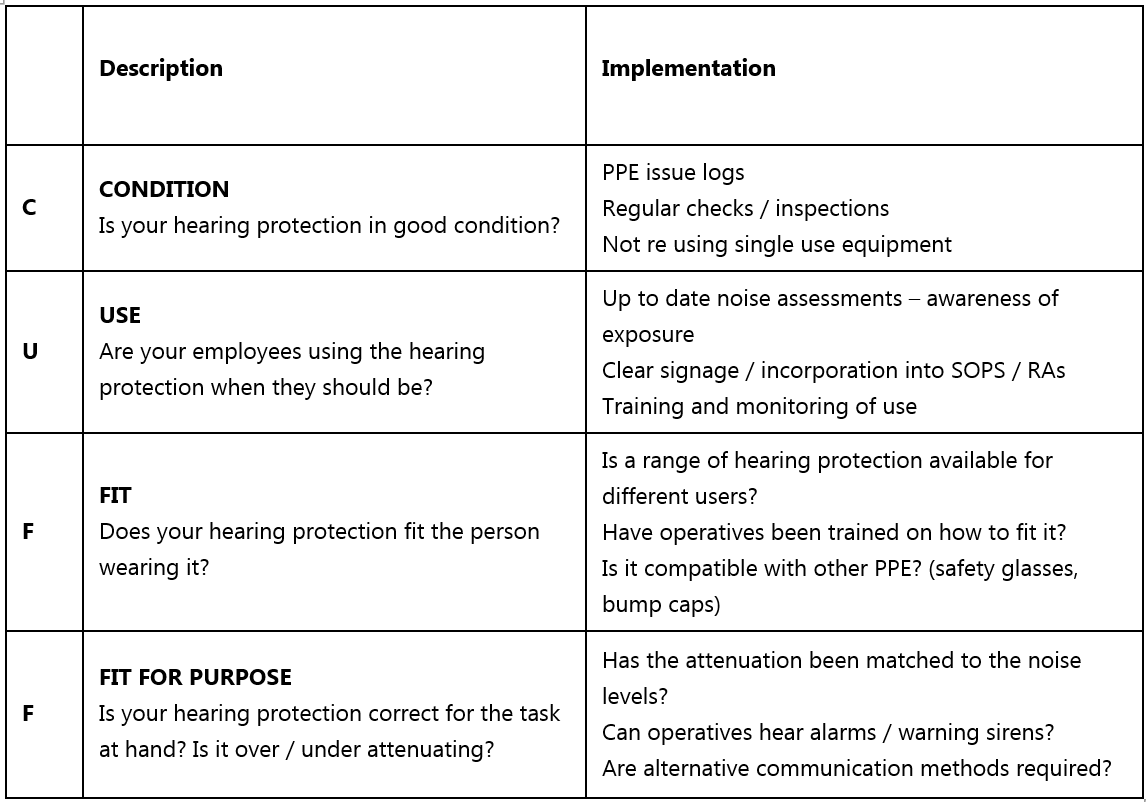
If used consistently, CUFF turns hearing protection from a tick-box issue at induction into a live, everyday safety habit, one that is quick to check and easy for anyone, regardless of role, to apply.
SOCOTEC can assist in assessing and managing workplace noise. Our reports include detailed assessments of noise levels across a site and for tasks typically undertaken. We also evaluate current controls and can recommend additional controls where required. Our reports include an evaluation of hearing protection suitability using the octave band method, as well as comments on its use and computability.
Want to find out more about Hearing Protection in the Rail Industry?